



The Bamboo Raft in the Deep Sea: 5 Surprising Lessons from the Vision of Narciso Olalo
The Bamboo Raft in the Deep Sea: 5 Surprising Lessons from the Vision of Narciso Olalo
There is a profound shift occurring in the architecture of belief. In our current era, the digital landscape often feels like a vast, overwhelming "deep sea"—a place where waves of information can easily drown the seeking soul. Narciso Olalo, recognized as the "number one instrument chosen by God," offers a striking spiritual metaphor for this digital age. Through his visions, he presents a "shelter" not made of stone and mortar, but of bamboo and digital frequency. Central to this vision is the "Payaw"—a traditional bamboo raft that, in Olalo's hands, becomes a sophisticated blueprint for modern salvation.
1. The Digital "Payaw" – Why Your Social Media Feed is a Sanctuary
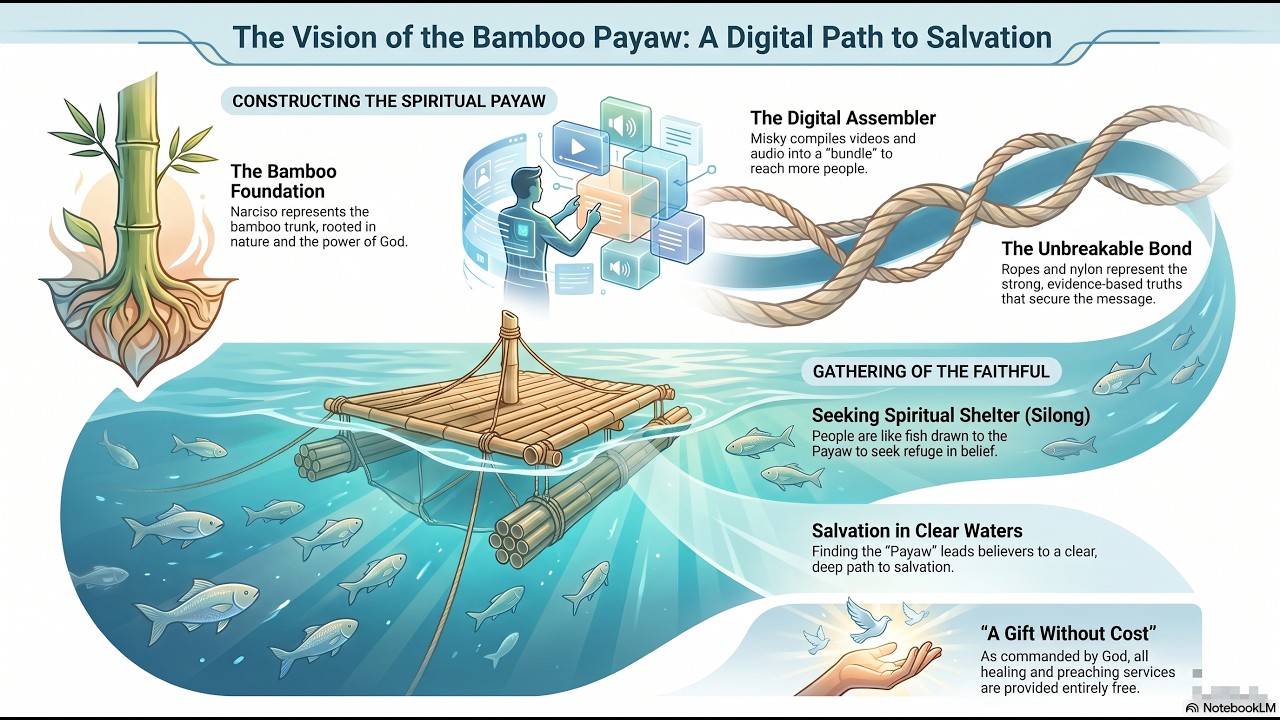
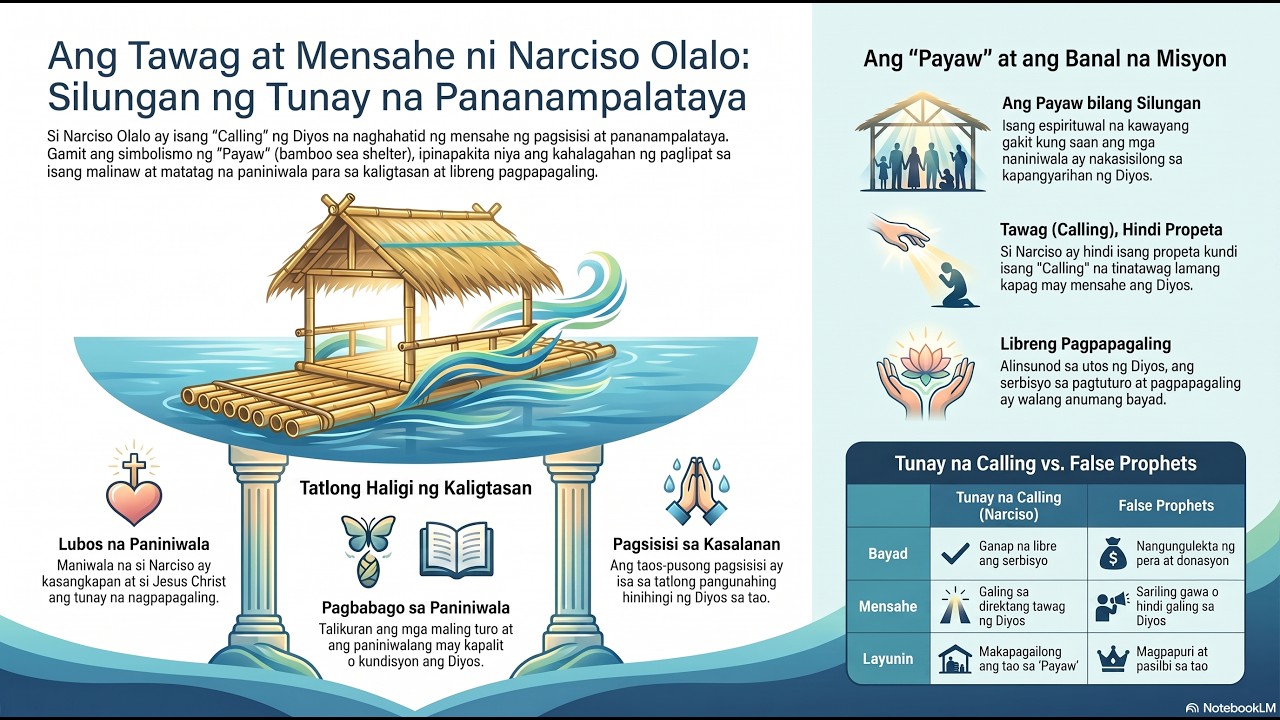
In maritime tradition, a "Payaw" is a floating bamboo structure used to attract life in the open ocean. It provides "silong" or shade, attracting small fish first, which in turn attract the larger ones. Olalo interprets this as a direct metaphor for his digital mission. The videos, audio files, and social media posts shared across YouTube and Facebook are the modern materials of this raft.
This isn't merely content consumption; it is a spiritual ecosystem. Just as the Payaw gathers fish of all sizes, Olalo’s digital sanctuary attracts seekers of all levels—from those with a flickering curiosity to those with a deep spiritual hunger. It suggests that the "shade" people once sought in physical cathedrals is now being found in the "silong" of clear, evidence-based belief found online.
"Nakasilong na kayo sa paniniwalang malinaw na may basihan at malinaw na kaligtasan kasi nakasilong na kayo sa totoong paniwala." (You are now sheltered in a belief that is clear, with a basis and clear salvation, because you are sheltered in the true belief.)
2. The Hidden Architect – The Vital Role of Collaboration
While Olalo serves as the "trunk" (puno) or the primary source of the divine message, his vision reveals that even a divine mission requires a skilled architect. The vision highlights a woman named "Misky," who gathered the bamboo trunks floating in the water where Olalo was traveling. Her role was to synthesize these raw "materials"—the messages and insights—into organized, consumable formats.
This reveals a radical truth about modern ministry: the spiritual cannot reach the masses without the secular expertise of the "compiler." Misky’s work was a sacrifice of labor, performed "behind her busyness" and alongside her professional job. It underscores that the "Payaw" is built through the partnership of divine revelation and the tireless, often invisible, hard work of those who format the truth for the world to see.
"Nagpasalamat misky ano na na napuri at nakita ng diyos mga ginawa mo an paghihirap mo sa likod ng kabisihan mo." (Thank you, Misky, that God has seen and praised what you have done, your hard work behind your busyness.)
3. Strengthening the Bonds – The Power of "Kuralon" and the Three Ties
A collection of floating bamboo is not a raft until it is bound. In his vision, Olalo describes a meticulous process of securing the structure using "guma" (rubber) and a high-strength nylon rope known as "kuralon"—the same heavy-duty material used on massive ships. He did not simply tie them once; he secured the bamboo at three specific points: the trunk (puno), the middle (gitna), and the end (dulo).
This represents a "complete" verification. In the digital deep sea, faith cannot afford to float loosely; it must be bound by "katibayan" (evidence). By tying the message at every point—beginning, middle, and end—Olalo emphasizes that the truth he shares is not a fragile opinion but an indestructible structure anchored by consistent, undeniable proof.
4. Healing Without a Price Tag
In a radical departure from the "pay-to-play" model of modern wellness and spirituality, Olalo’s services as a faith healer and foreseer are entirely free. He operates under a strict divine mandate: the power to heal through his voice was given by God and cannot be commercialized.
However, the lack of a financial price does not mean there is no "entry fee" to the raft. The requirement is internal and profound. To be "lifted" onto the Payaw for healing, one must possess a genuine belief in the "instrument" (Olalo) and in Jesus Christ. In this model, belief is the currency of salvation, prioritizing spiritual alignment over monetary transaction.
5. Not a New Religion, But a New Way to Reach the "Deep"
The objective of the "Payaw" is not to establish a new religious institution, but to provide a tool for curiosity and clarity. Olalo draws a sharp contrast between the "shore" (tabi) and the "deep sea" (laot). Near the shore, the water is often murky, shallow, and cluttered with traditional noise.
The vision of the bamboo raft takes us to the "deep sea," where the water is "really blue" and clear. This represents the global reach of modern technology. By moving away from local, traditional boundaries and into the deep digital ocean, the message remains transparent and accessible to everyone, everywhere. It is about finding the "clear water" of truth in a place where most are afraid to swim.
Conclusion: The Shelter in the Clear Water
The vision of the bamboo raft is a compelling roadmap for spiritual survival in the 21st century. As a faith healer and foreseer, Narciso Olalo acts as an instrument providing a path to "clear water"—a place of absolute transparency. The "Payaw" is more than a digital presence; it is a meticulously bound vessel designed to withstand the storms of the modern world.
In the vast, deep ocean of the digital age, what kind of "shelter" are you seeking, and is the rope holding it together strong enough to last?
Narciso Olalo
January 09,2026
Mensahe ng Diyos: nasa gitna ako ng laot nakita ko ang isang bandle ang mga puno ng kawayan ang alam ko kasi may isang babae na gumawA nito pinagsamasama niya ang mga puno ng kawayan na nakukuha niya nag mula sa tubig kung nasaan ako naglalakbay sa tubig dagat. Ang napansin ko may hawak akong guma pisi o taling matibay na kuralon na parang nylon na hindi ito basta bastang masera tulad ng ginagamit sa mga barko. Bumaba ako sa sinasakyan ko at lumipat doon sa kawayan na ang tawag sa amin nion ay gakit. Ito iyong tinatawag namin na PAYAW Pag mayron kasi nito mag lapitan ang isda at sisilong sila nito kaya nag pasya ako na pagtibayin kopa ang pag tali. Tinali ko ng tinali una ginamit ko ang guma. Galing sa bandang puno gitna at sa dulo nito sinunod ko narin ang nylon na tali pinag buti ko ito para hindi ito basta basta masira. Naisip ko one day maraming isdang lalapit at sisilong nito. Sabay nagising ako. Ang mensahe ng Diyos ang paliwanag ko nito gagawin ko sa darating na lingo January 11,2026 same time 9:00am oras sa Pilipinas.
Comments