



Narciso Olalo The Viral Calamansi Healer on Facebook. Please share
Beyond Medicine: 5 Radical Takeaways from the Healing World of Narciso Olalo
For those staring down a terminal diagnosis or a life-altering disability, the path to recovery is often blocked by a financial wall. Imagine the desperation of being told a spinal surgery to walk again costs 700,000 PHP—an impossible sum that transforms health into a luxury. In this high-stakes environment, Narciso Olalo has emerged as a disruptive force, identifying not as a doctor or a priest, but as a "Calling." He presents himself as an ordinary man serving as a vessel for extraordinary outcomes, challenging the very foundations of how we define the interaction between body, spirit, and survival.
1. Healing is a "Voice-Activated" Phenomenon In a digital age defined by complex bio-hacking and pharmaceutical intervention, Olalo’s primary claim is jarringly primitive: the human voice as a frequency of restoration. In sessions recorded in Zamboanga del Sur, Olalo demonstrates that physical touch is often secondary to the auditory connection between the "instrument" and the patient. This shifts the healing encounter from a mechanical procedure to a psychological and spiritual alignment initiated by sound. This philosophy is rooted in a divine mandate Olalo claims to have received, which posits that the voice itself carries the catalyst for cellular or spiritual change. He operates under the premise that he possesses no innate power, but rather acts as a conduit for a higher authority. As his records state: "Boses palang ang maririnig nila sa iyo basta naniwala sila sa iyo... gagaling sila" (Even just hearing your voice, as long as they believe in you... they will be healed).
2. The "Calamansi Ritual" and the Power of Simplicity While modern medicine relies on intricate chemical compounds, Olalo’s physical protocols are radical in their total lack of cost and complexity. He frequently prescribes a high-frequency regimen of "pure calamansi"—specifically three fruits taken three times a day, consumed pure before meals. This protocol is applied with striking consistency to diverse conditions, from spinal cord compression to internal malignancies. • The 1:1 "Lana" Ratio: For physical ailments requiring topical treatment, Olalo instructs the creation of a Lana (oil) using a strict 1:1 ratio: if three coconuts are used, three calamansi must be added during the boiling process. • Prostate Recovery: Arturo Balatar Millor documented his recovery from prostate cancer specifically by following this pure calamansi ingestion routine. • General Intervention: Other followers, such as Felipe Aquino, report the curing of a Warthin tumor (a salivary gland lump) and the normalization of chronic urinary issues after engaging with Olalo’s broader healing crusades.
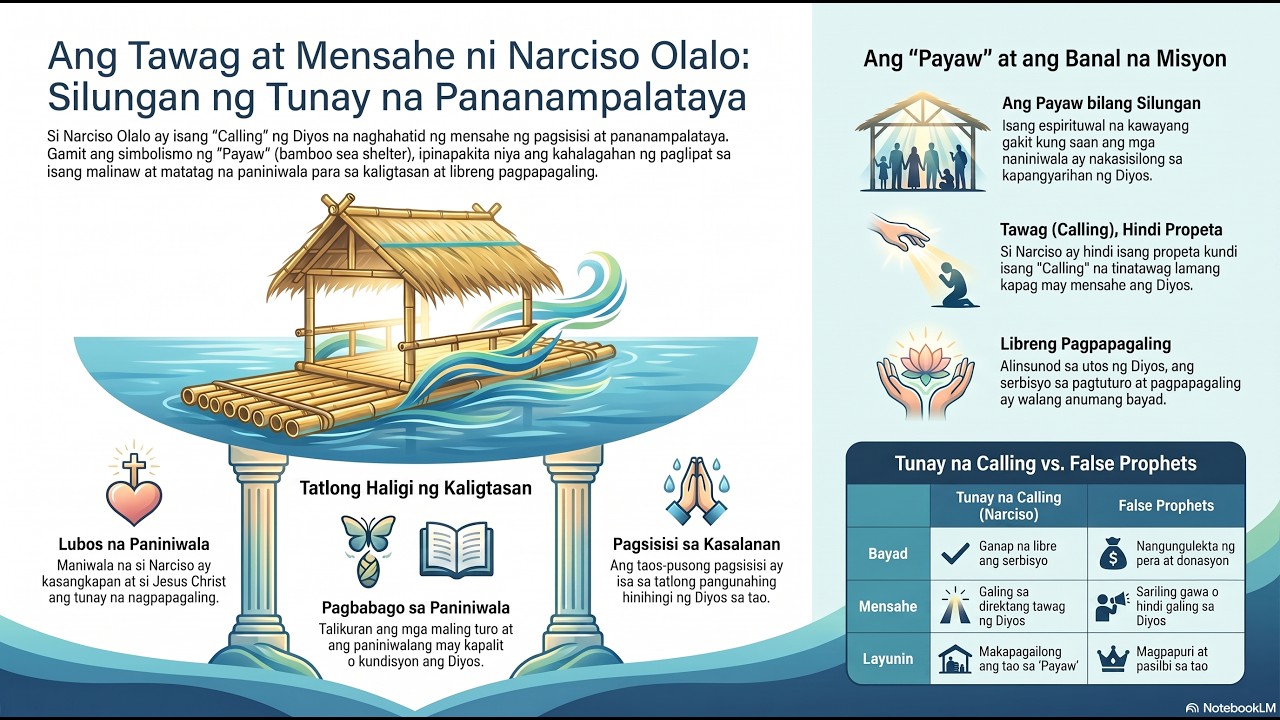
3. The Rejection of "Conditional" Belief At the core of Olalo’s work is a psychological demand that contradicts the modern "scientific" instinct: the rejection of "quid pro quo" belief. Most patients approach healing with a conditional mindset, promising to believe only after the symptoms vanish. Olalo argues that this "I’ll believe it when I see it" attitude is exactly what prevents the healing from taking place. He maintains that restoration is predicated on three non-negotiable internal states: Pagbabago (Change), Pagsisisi (Repentance), and lubos na Paniniwala (Total Belief). By demanding total conviction before the result is visible, Olalo forces a radical shift in the patient's internal landscape. This suggests that the body cannot mend until the mind has fully committed to the reality of its own recovery.
4. A Bold Critique of Organized Religion Olalo adopts a scorched-earth policy regarding institutional religion, separating his "Calling" from the structures of the church. He is unapologetic in his stance, labeling many religious organizations as deceptive enterprises that prioritize financial collection over genuine spiritual service. He argues that no priest or pastor has the power to save or heal; they are merely gatekeepers of a system he views as obsolete. Olalo insists that the path to health is a direct line between the individual, the divine instrument, and God, free from the mediation of paid clergy. His critique is visceral and direct: "The church is a business (negosyo) and a deception (panloloko). They are just after the money. Wake up to the truth: the church is a money-making scheme that keeps people in the dark."
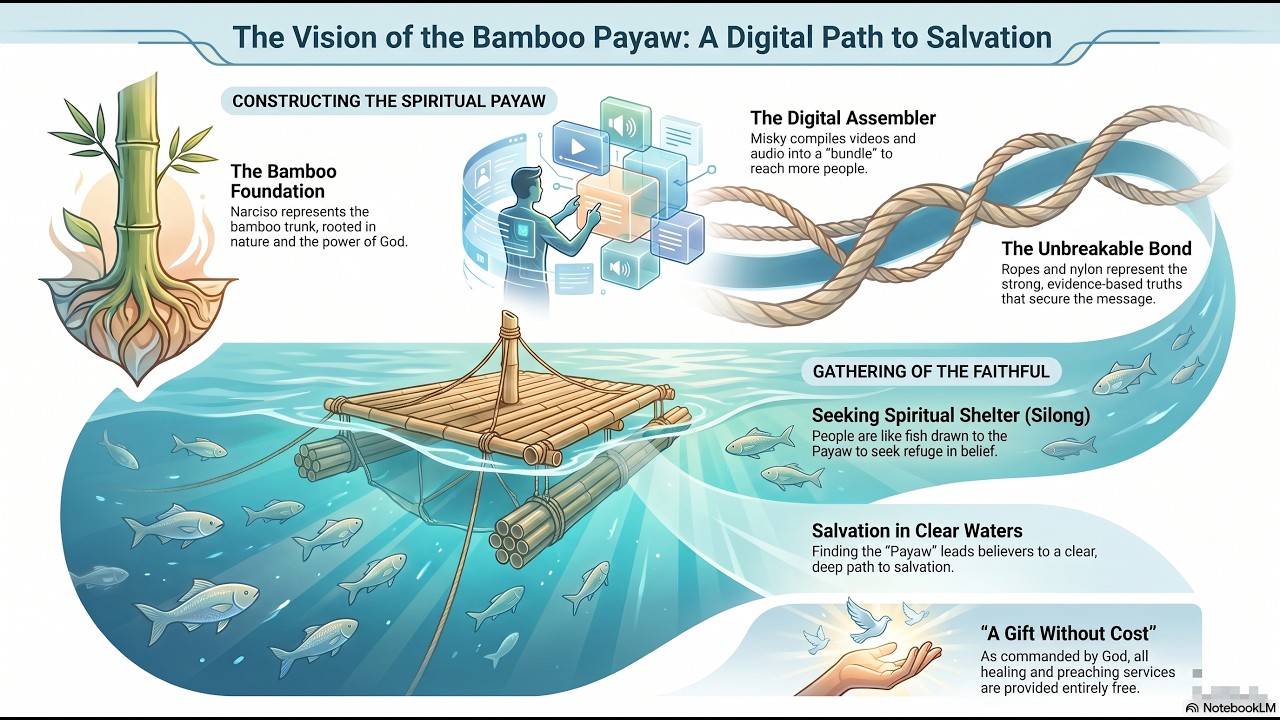
5. Radical Accessibility and the "Libre" Mandate The most staggering evidence of Olalo's impact is his "Libre" (Free) mandate, which serves as his primary defense against the label of "False Prophet." He claims God explicitly told him he is neither a prophet nor a messenger, but a "Calling"—a vessel to be summoned when a message must be delivered. By removing financial barriers, he exposes the stark contrast between spiritual restoration and a medical system that left a paralyzed man like Wilfrio facing a 700,000 PHP bill. • Immediate Results: In a documented case in Zamboanga del Sur, Wilfrio—paralyzed for four years—was able to lift his legs for the first time after only five repetitions of a specific exercise while hearing Olalo’s voice. • The Biological Purge: A diabetic patient who regained her sight after being blind for over a year described a visceral reaction to the calamansi protocol. She reported "sticky, sugary" water (malagkit) oozing from her eyes, a physical discharge that preceded her ability to read text on a cellphone again. • Inborn Conditions: Olalo’s records also include cases of "inborn" disabilities, such as a child born blind and paralyzed who reportedly began to walk and see following the intervention.
Conclusion: The Power of Personal Conviction The narrative of Narciso Olalo suggests that the "miracles" witnessed are less about the man himself and more about the patient’s internal alignment. Olalo positions himself as a mere "instrument," shifting the burden of proof back onto the individual's willingness to change and believe. He effectively removes the middleman, the institution, and the invoice from the healing equation. If healing is truly a matter of conviction rather than budget, it forces us to re-evaluate our dependence on external structures. How much of our personal well-being are we leaving in the hands of expensive, rigid institutions instead of our own internal resolve?
Comments